
Checking Criminal History in Jack County
Begin by deciding what the answer must prove. The 271st Judicial District Court handles Jack County felony cases, and the District Clerk keeps those files in Suite 310 of the courthouse. The County Clerk in Suite 208 keeps the county misdemeanor docket. A current booking, sheriff incident report, or jail release entry instead belongs at the Law Enforcement Center. Texas DPS adds a statewide layer for convictions and deferred adjudications reported to its repository. Each record has a different scope, so a blank result from one channel does not cancel a record held elsewhere.
Gather a full legal name, correct spelling, date of birth when lawfully available, an approximate filing or arrest date, and any cause, incident, warrant, or booking number. Those details help the clerk separate similar names. Use this sequence for a Jack County criminal record search:
- Ask the District Clerk about a felony or the County Clerk about a county misdemeanor. Supply the cause number when known.
- Try re:SearchTX for participating court data, then return to the clerk for older, missing, or non-digitized Jack County files.
- For current custody, check the official-linked jail roster or call the jail. Request a booking copy from the sheriff in writing.
- Use the DPS public name product for statewide public conviction and deferred-adjudication data, while treating a name match as provisional.
- For the most reliable review of your own Texas history, use the DPS Personal Review process and FAST fingerprints.
Federal cases are separate. Jack County lies in the Northern District of Texas, so federal dockets do not become Jack County clerk files. The right first stop depends on who created the record and what stage the event reached.
Jack County Records Use Two Buildings
Jack County criminal records divide sharply between the courthouse at 100 N. Main Street and the Law Enforcement Center at 1432 FM 3344 in Jacksboro. The courthouse holds the filed judicial trail. District Clerk records cover felony pleadings, docket events, orders, judgments, and sentences. County Clerk records cover the appropriate misdemeanor cases. The Justice of the Peace, County Judge, and County Attorney also work from the courthouse, which makes that building the center for case, warrant, magistration, and prosecutor records.
The sheriff campus holds the operational trail. Dispatch records officer activity and uses TLETS/OMNIXX for wanted, stolen, and criminal-history inquiries. Jail staff create booking, charge, bond, property, screening, custody, and release entries. The arresting agency creates the incident narrative. Those files may later connect to a court case, but they do not become a clerk file at intake.
| Need | Start Here | What It Can Confirm |
|---|---|---|
| Felony case | District Clerk | 271st District Court filings and outcome |
| County misdemeanor | County Clerk | County Court docket and judgment |
| Arrest or report | Creating agency | Officer narrative and arrest facts |
| Booking or custody | Jack County jail | Intake, bond, hold, release, and transfer |
| Statewide public history | Texas DPS | Public conviction and deferred data reported to DPS |
This two-building split prevents a common error. A felony judgment should be sought from the District Clerk, while a booking sheet should be sought from the sheriff. Asking the wrong office can produce a truthful no-record response to the wrong question.
Texas Official Background Checks
The Texas Department of Public Safety Crime Records Division maintains the statewide Computerized Criminal History repository. Its public name search releases Texas convictions and deferred adjudications available under Government Code Section 411.135. The service requires an account and prepaid credits. DPS currently describes an online search credit as $1, with a 2.25 percent fee per credit and a 25-cent credit-card transaction fee. A no-match search still uses a credit. The mailed CR-42 request costs $10 for each subject.
Name searches are useful but not conclusive. Similar names, aliases, incomplete dates of birth, missing fingerprints, and delayed disposition reports can create a false match or a false sense that nothing exists. For review of your own Texas history, DPS directs users to Fingerprint Applicant Services of Texas, or FAST, with prints captured through IdentoGO. DPS lists a $15 Texas record fee plus a $10 FAST fingerprint fee in its general guidance, though the current service-code total should be confirmed when scheduling.
| DPS Search Field | Required | Format and Use |
|---|---|---|
| Last Name | Yes | Use the full legal surname, not a partial name or nickname. |
| First Name | Yes | Use the full legal first name. |
| Middle Name | No | A middle or maiden name can improve matching. |
| Date of Birth | No | A complete date narrows results; the search also accepts partial date elements. |
| Search | Yes | Submitting the name uses a credit under the current public model. |
No permanent IdentoGO enrollment site was verified inside Jack County. Search the appointment system at booking time rather than relying on an old location listing.
Jack County DPS Record Matching
DPS searches more than one exact string. Its instructions describe matching last and first names without a middle name, matching a middle initial, testing birth-month and birth-day combinations, and using similar-spelling logic. A result preview may show descriptive information and a photograph before a record is opened. A careful Jack County criminal history search uses the subject's full legal first and last name. A middle or maiden name and a complete birth date can narrow the field.
The official DPS search instructions show how the name fields and matching guidance are presented.

The captured screen is a reminder to compare identifiers before opening or relying on a result. Only a fingerprint comparison can positively associate a person with a Texas criminal history.
A DPS entry and a Jack County court file also answer different questions. DPS can connect reportable events across Texas counties. The local file can show the charging instrument, hearings, orders, and disposition documents that the public DPS extract does not display. When a disposition appears missing or a name seems misidentified, obtain the local judgment and use the DPS personal-review correction route.
Criminal Record Types
Jack County criminal history is a group of records, not one report. An arresting deputy, Jacksboro officer, constable, trooper, or game warden creates the first agency record. Jail staff add custody data. Prosecutors decide what to file, and clerks preserve the case. DPS then joins reportable arrest and disposition information through fingerprints and tracking identifiers. A person may need several of these sources to reconstruct one event.
- Incident and arrest reports: describe the call, location, alleged offense, people involved, and officer actions, subject to lawful redactions.
- Booking records: show intake, the arresting agency, charges received, bond, holds, release, and custody status.
- Court files: contain the complaint, information or indictment, docket events, rulings, disposition, sentence, and costs.
- Warrant records: originate with a judge or magistrate and may require direct confirmation with the issuing court or sheriff.
- Supervision and custody records: separate Jack County community supervision from TDCJ parole and state-prison data.
- Registry records: provide public-safety information under Texas Chapter 62, not a complete criminal history.
Booking charges can change after prosecutor review. An arrest is not proof of guilt, and a dismissal does not by itself erase the arrest report. Court dispositions and any later expunction or nondisclosure order must be checked at their own custodians.
Jack County Warrant Records
No official public Jack County name-search warrant portal was found. For your own possible warrant, use official contacts and identify the issuing court. The sheriff can answer process questions at 940-567-2161, but its Open Records Unit does not accept a records request by telephone. Felony process may lead to the District Clerk. County misdemeanor process may lead to the County Clerk. The Justice of the Peace at 940-567-2001 handles JP matters, and a municipal citation or fine-only warrant belongs with the named city court.
A warrant may be newly issued, sealed, recalled but not yet synchronized, or absent from a public case display. A no-match on a jail roster only addresses that custody interface. It does not prove that no warrant exists. Ask the named court whether the process is active, whether bond is set, and what appearance or recall procedure applies. Use independently published office numbers, since a demand for payment from an unsolicited caller is not reliable proof of a warrant.
Common terms include an arrest warrant based on probable cause, a capias tied to a court event, and a capias pro fine after judgment and fine procedures. Search warrants and parole-violation warrants follow different access paths. Only the issuing authority can confirm current status.
Inside a Jack County Criminal Record
The contents depend on the custodian. A fingerprint-based rap sheet organizes identity data around arrest cycles and reported outcomes. A Jack County criminal case file centers on a cause number and the court's actions. A jail record centers on intake and release. Reading the source label before reading the facts helps prevent an arrest allegation from being mistaken for a conviction.
| Name and Identifiers | Legal name, aliases, birth date and descriptors; a DPS record may include Texas SID and FBI identifiers. |
|---|---|
| Arrest and Booking Data | Arrest date, agency, tracking number, booking time, charge received, bond, holds, release or transfer. |
| Charges and Court | Complaint, information or indictment, statute, degree, cause number, filing court and docket events. |
| Disposition | Dismissal, acquittal, conviction, deferred adjudication, plea, trial outcome and the date recorded. |
| Sentence | Confinement, fine, restitution, community supervision and other terms ordered by the court. |
| Custody or Supervision | County jail status, TDCJ facility or release data, or public court evidence of community supervision. |
Several terms matter in Jack County records:
- Magistration
- The prompt warning, probable-cause, counsel, and bond process after a Texas arrest.
- Disposition
- The recorded outcome of a charge or case.
- Deferred adjudication
- Community supervision without an immediate finding of guilt; completion does not erase the record by itself.
- Information
- A prosecutor's formal charging instrument commonly used for a misdemeanor.
- Indictment
- A grand jury's formal felony accusation, which is not proof of guilt.
Jack County Custody Record Transfers
County custody and state custody use different systems. The Jack County jail holds local intake and current or recent custody information. After a person is sentenced and transferred to state prison, the Texas Department of Criminal Justice becomes the useful locator. TDCJ searches by last name, first name, TDCJ number, SID number, gender, and race. A name search generally needs the last name and at least a first initial. Results may show age, current facility, offenses, and projected release data.
The TDCJ inmate and parole telephone page documents alternatives when online results are unclear.
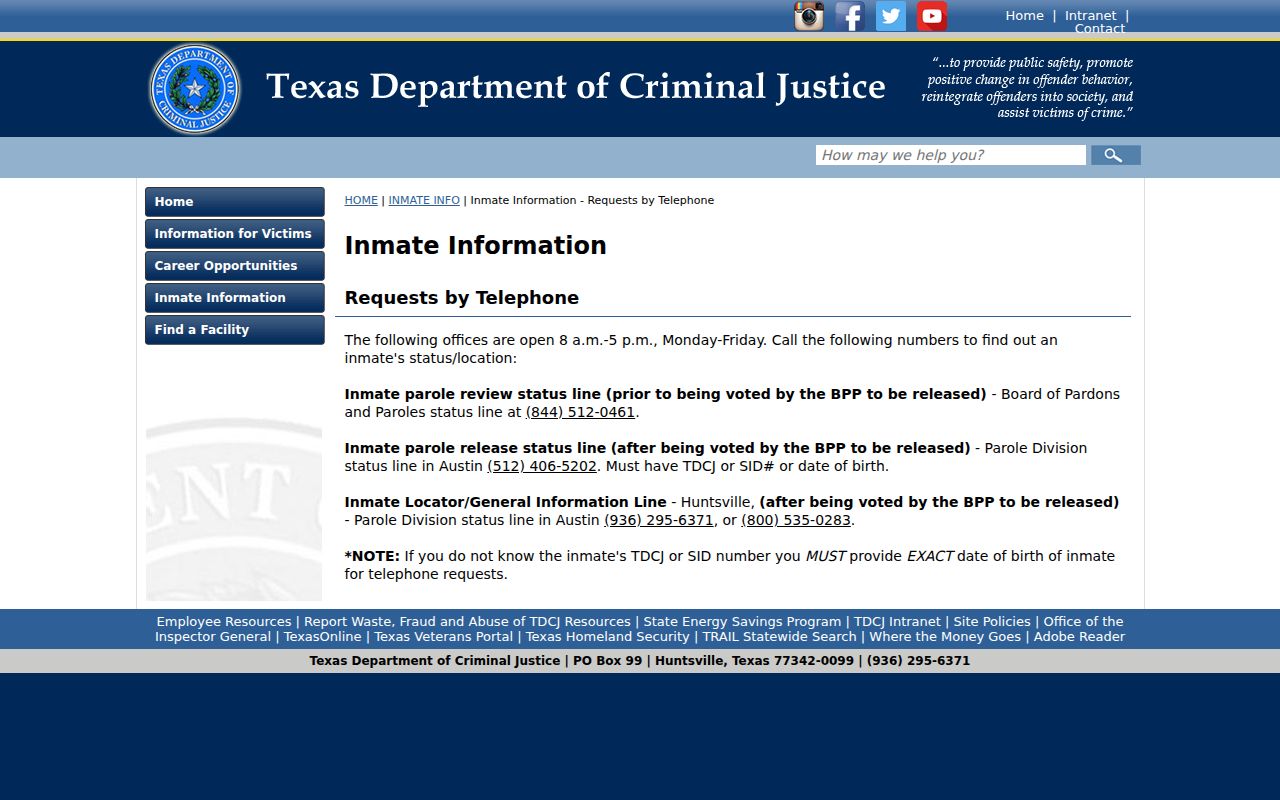
The state lists inmate-information lines at 936-295-6371 and 800-535-0283. Without a TDCJ or SID number, an exact date of birth is required. Parole-review status uses 844-512-0461 before a Board vote, while post-vote release status uses 512-406-5202.
Parole and probation should not be merged. Jack County Community Supervision and Corrections Department handles court-ordered community supervision locally, while the Texas Board of Pardons and Paroles makes release and revocation decisions and the TDCJ Parole Division supervises release. Detailed officer notes and reporting history are not a public name-search profile.
Public Access Laws in Texas
The Texas Public Information Act governs requests to governmental bodies for public information, but it does not make every police or jail record fully open. Law-enforcement exceptions, juvenile confidentiality, victim protections, medical privacy, and protected identifiers can lead to withholding or redaction. Court files are obtained through the clerk under judicial-record access and redaction rules. A focused request helps staff identify the right record and apply those rules to the actual material.
Key Texas laws:
Government Code Chapter 552 provides public-information access and sets request handling duties and exceptions.
Government Code Chapter 411 controls public DPS criminal-history dissemination and orders of nondisclosure.
Code of Criminal Procedure Chapter 55A governs expunction eligibility, notice, procedure, and effect.
Code of Criminal Procedure Chapter 62 governs sex-offender registration, verification, duration, and the public registry.
Government Code Section 411.135 allows DPS to disclose conviction and deferred-adjudication information through its public service. That does not open every underlying narrative. The creating agency still reviews its own report, and the clerk controls access to its own court file.
Jack County Written Records Requests
The Jack County Sheriff's Office calls its channel the Open Records Unit and requires requests in writing. A caller may ask questions at 940-567-2161, but cannot place the request by phone. A requester may deliver a letter at 1432 FM 3344, fax it to 940-567-2144, mail it to the Open Records Unit at that address, use the email link on the sheriff page, or upload a written request through the web form. The form asks for a name, email, subject, message, and an optional file of up to 10 MB.
A useful request identifies the date range, place, people and roles, incident or booking number, creating agency, and desired format. Ask for a cost estimate because the sheriff does not publish a flat report-copy fee. The office states that a response may be given within 24 to 72 hours when needed and that an online submission will be processed and returned by the chosen delivery method within ten business days. That service statement is not a promise that every responsive record must be released within ten days.
The county's 2026 move to CivicPlus NextRequest adds a current public-information path on the official county portal, while older county pages may still appear in searches. Use the current jackcounty.texas.gov contacts. Send a Jacksboro Police report request to the city, not the sheriff, even when the person later entered the county jail.
Sealed, Expunged, and Restricted Records
Texas expunction and nondisclosure are distinct. Expunction under Chapter 55A generally removes or destroys qualifying arrest records. Eligibility turns on the outcome, offense, waiting period, and other facts. Common paths can include qualifying acquittals, pardons, certain dismissals or no-bills after statutory conditions, mistaken identity, and specified treatment-court outcomes. A conviction or deferred adjudication does not become eligible merely because time passed unless a specific statute provides relief.
An order of nondisclosure restricts public criminal-history disclosure but does not destroy every record. Listed government and criminal-justice users can retain access. Juvenile records follow separate confidentiality and sealing rules. Victim and minor identifiers may be redacted even when the rest of an adult file is public. A dismissal can leave an arrest report visible unless legal relief reaches it.
The Jack County District Clerk fee schedule lists a $355 base filing fee for expunction, plus $18 to issue a notice or order to each agency served by certified mail. A nondisclosure petition is listed at $383, made up of the civil base and statutory fee. Current law matters because Chapter 55A was reorganized effective in 2025; older material that cites former Article 55.01 should not control a new filing.
Jack County Expunction Record Notices
Jack County's local procedure highlights a detail that broad Texas summaries often miss. Either the Justice of the Peace or the County Judge may have performed magistration, and those officers may rotate. The petition must identify the right magistrate and every agency that holds or published the arrest data. Leaving one holder outside the notice chain can leave part of the Jack County record untouched.
The official Jack County expunction procedure names the District Clerk, Wise and Jack County District Attorney, Jack County Sheriff, County Clerk, County Attorney, Justice of the Peace, County Judge, and DPS Crime Records Service as common recipients, while warning that the list is not exhaustive.
When an agency email is included, the local procedure says the $18 certified-mail charge is not required for that recipient. Outside arresting agencies, repositories, and publishers must still be identified when they hold the event. After relief is entered, a person can compare the clerk display with a DPS personal review to check whether the order propagated through the official record chain.
The FAST enrollment interface is the official scheduling point for fingerprint capture used in a Texas personal review.
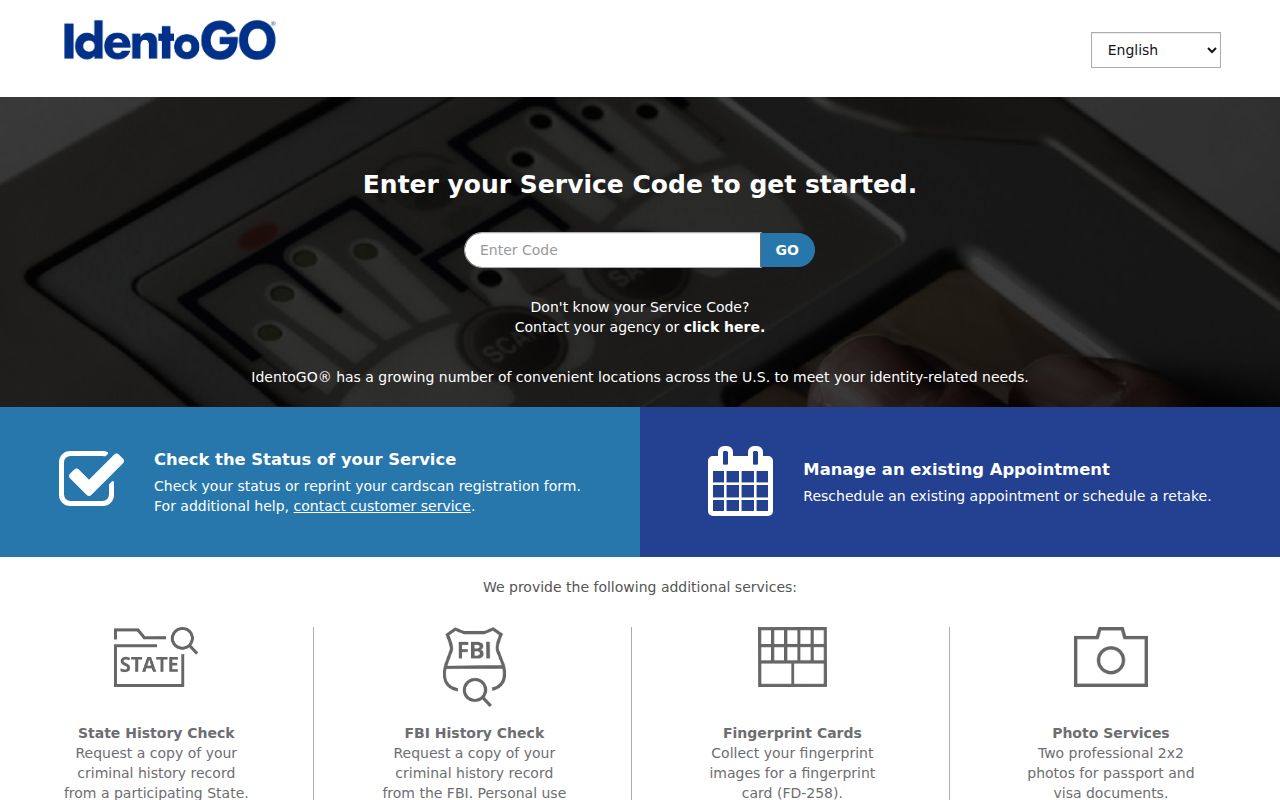
The scheduling screen should be used to find a current nearby site because no permanent Jack County enrollment center was verified.
Jack County Criminal Records by City
Jack County has two incorporated cities, Jacksboro and Bryson. Their record routes differ. Jacksboro Police creates city incident and arrest reports, while the Jacksboro Municipal Court keeps fine-only city cases. Bryson readers must first identify whether the sheriff, a trooper, a game warden, or a municipal authority created the record. Both cities ultimately use the Jack County jail and courthouse clerks when an event becomes a county booking, misdemeanor prosecution, or felony case. Census QuickFacts for Jack County provides the official county population context.
Jacksboro Criminal Records
4,184 residents in the 2020 Census. City police reports and Municipal Court files use separate local request channels.
Bryson Criminal Records
449 residents in the 2020 Census. Identify the responding agency before requesting a report or tracing a county booking.
Jacksboro remains the county seat and primary record hub. Bryson is the only other incorporated city; Perrin, Jermyn, Wizard Wells, and the county's other named places are not substitutes for a third city page.
Jack County Criminal Record Archive
The District Clerk reports that its permanent records reach the late 1800s. That long archive makes the Jack County courthouse relevant to genealogy and historical research as well as current cases. The present courthouse has served county government since 1940 and was listed in the National Register of Historic Places in 2012. Earlier county records were moved to Jacksboro in 1865 during renewed frontier conflict, so the physical archive carries a much longer timeline than the present building.
For an older criminal file, give the clerk a full name, approximate year, likely case level, and any known cause number. The published District Clerk schedule lists $5 for a name or record search, $1 per page for non-certified paper, and $1 per page plus a $5 certificate and seal for certified paper. Emailed non-certified copies cost $1 for up to ten pages and ten cents for each added page. Confirm that the schedule applies to the exact file.
Modern state and federal tools add other layers without replacing the archive. The Northern District of Texas site identifies the federal court that covers Jack County.
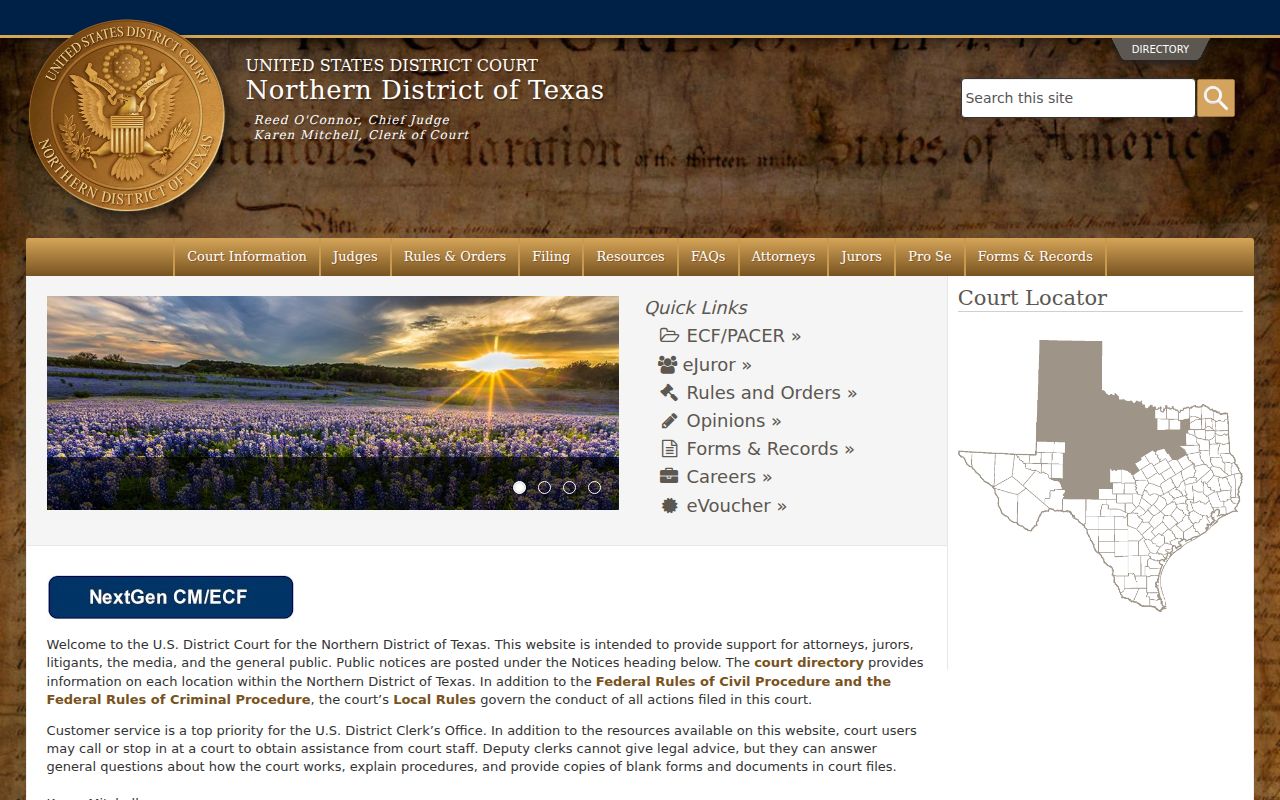
The federal court capture marks the jurisdictional split: a federal prosecution is not filed at the Jack County courthouse.
PACER supplies the federal electronic docket and document channel.
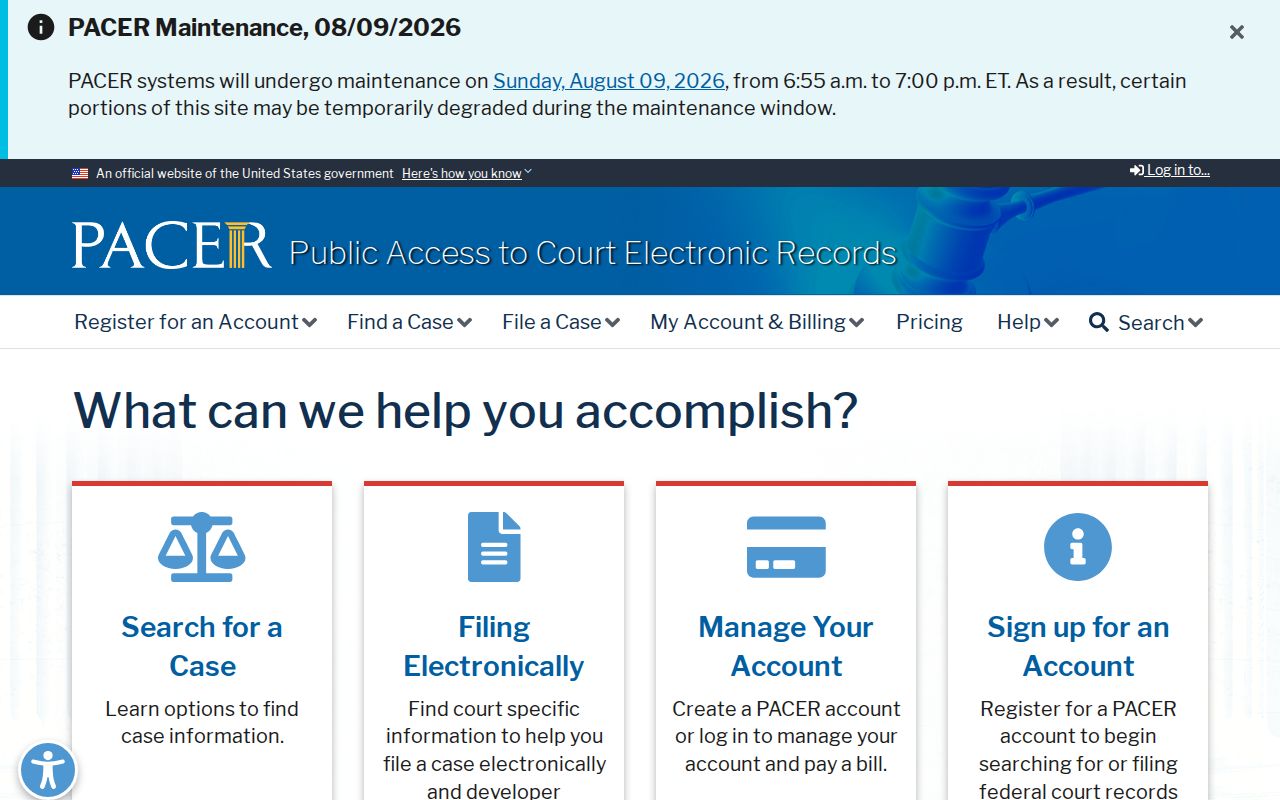
PACER requires registration and can charge document fees, while sealed matters and nonpublic warrants will not appear as open records.
For federal custody rather than a docket, use the Federal Bureau of Prisons Inmate Locator.
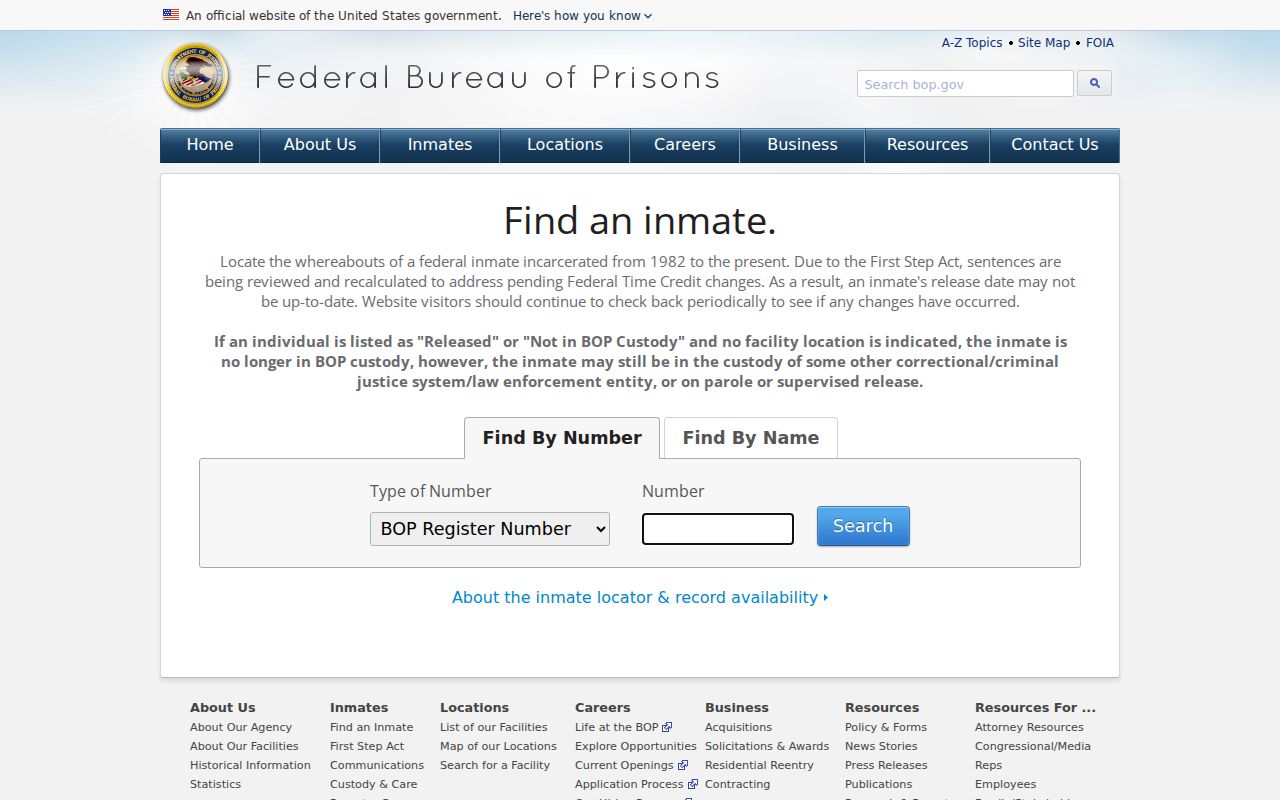
The BOP image represents a separate custody system; no federal prison facility is located in Jack County.